Meet Clarity: The HRM for Everything Between Hiring and Resignation
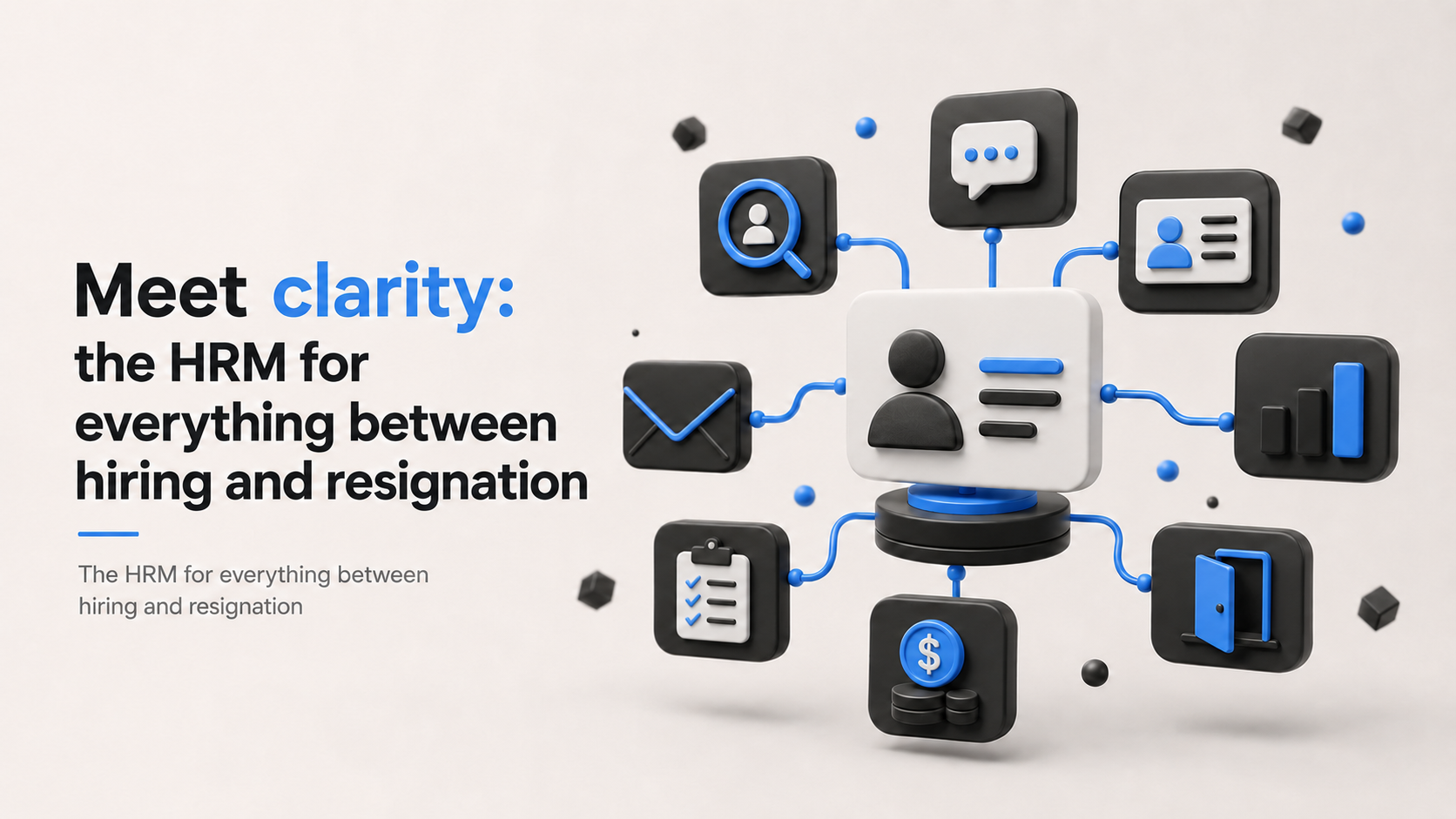
HR usually does not become difficult because one task is complicated. It becomes difficult because every task lives somewhere different.
Recruitment is handled in one tool. Attendance is tracked somewhere else. Leave requests arrive through email or chat. Payroll has its own software. Performance reviews live in spreadsheets. Asset records are maintained manually. When someone resigns, HR suddenly needs information from all of them. The result is a lot of administration for things that should be connected.
Clarity is built around a simpler idea: manage the employee lifecycle in one HRM, from hiring and onboarding to attendance, work, payroll, performance, assets, and eventually offboarding. Eazisols built Clarity as its own in-house HR management platform and uses it to manage these employee processes within one system.
What Is Clarity HRM?
Clarity is a Human Resource Management system designed to keep the everyday relationship between a company and its employees in one place. That includes the obvious HR functions such as employee records, attendance, leaves, and payroll and it also goes further into hiring, onboarding, work-from-home requests, reimbursements, performance reviews, KPIs and OKRs, projects and employee work, company assets, and resignations.
Instead of asking employees and HR teams to move between several applications, Clarity creates one employee record that continues throughout the person's time at the company. Hiring should not be disconnected from onboarding. Attendance should not be disconnected from leave. Performance should not be disconnected from actual work. Resignation should not require rebuilding an employee's history from five different systems.
One Dashboard for Everyday HR
Most employees do not need to see the entire HR system every morning. They need to know what matters to them. Clarity's employee dashboard brings everyday information together, including attendance status, working hours, leave balances, pending requests, and other employee information.
Instead of messaging HR to ask how many annual leaves they have left or whether a request was approved, employees can check the information themselves. These small questions create a surprising amount of repetitive HR work when employees do not have self-service access. For managers, the same system creates a clearer view of the team without requiring another spreadsheet.
Attendance and Time Tracking
Attendance becomes especially complicated when a company has remote or hybrid employees. Traditional office attendance may tell you who entered the building. Remote work needs a different approach.
Clarity supports web-based attendance and also offers an optional desktop application for Windows, macOS, and Linux that can record work time and activity. Organizations can choose whether they want this additional monitoring rather than making it mandatory for every team. Attendance information can then sit alongside working hours, leave records, work-from-home requests, and employee information reducing the need to manually compare several systems when reviewing someone's attendance.
Leave Requests Without the Email Chain
Leave management looks easy until the company grows. An employee sends a request, a manager needs to approve it, HR needs to update the balance, attendance needs to reflect the leave, and someone later asks how many days are remaining. When all of this happens through email or chat, mistakes become common.
Clarity keeps leave balances, requests, approvals, and attendance connected. Employees can see their available leave and submit requests through the system, while managers and HR can process them using the same record. Different leave categories can also be managed according to company policy, which means less back-and-forth between employees, managers, and HR.
Hiring and Onboarding in the Same System
The employee lifecycle does not begin on the first working day. It starts when someone becomes a candidate. Clarity includes hiring functionality for managing job openings, candidates, and recruitment pipelines. Once someone is hired, onboarding can continue within the same HR environment.
Without that continuity, companies often manage recruitment in one platform and then manually recreate the new employee inside HR software after they accept the offer. A connected process looks more like Candidate → Offer → New Hire → Onboarding → Employee. Onboarding can then include documents, tasks, company information, and other first-day requirements so the process becomes repeatable instead of something HR has to remember for every new employee.
Performance That Includes Actual Work
Many companies review employees once or twice a year using forms and manager memory. That creates a simple problem: people are being evaluated based on what everyone remembers rather than what actually happened.
Clarity connects performance management with KPIs, OKRs, appraisals, and employee work information. KPIs help measure ongoing performance. OKRs connect employees or teams with larger goals. Appraisals provide a structured performance review. When these are connected with the employee's actual work history, managers have more context for performance conversations instead of asking what the employee did over the last six months.
Projects and My Work
This is one area where Clarity moves beyond a traditional HR database. The platform includes project and work-management functionality so organizations can see not only who an employee is, but also what they are working on which projects they are assigned to, what work is currently open, what has been completed, and how workload is distributed. That can make performance discussions more useful because project activity and HR information do not have to be reconstructed from separate tools.
Payroll, Reimbursements and Employee Records
Salary information, payslips, reimbursements, and payroll records are often scattered between HR and finance systems. Clarity includes payroll and reimbursement workflows alongside employee information, making it easier for employees to find their information and for HR teams to maintain accurate records. The same principle applies to the employee directory personal information, job details, attendance, performance, and payroll relationships remain connected to the employee.
Tracking Company Assets
Employees often receive company property such as laptops, phones, monitors, accessories, and other equipment. These records may seem minor until someone resigns and HR has to answer what company equipment that person still has. Clarity includes asset management so equipment can be linked to the employee responsible for it useful throughout employment, but especially during onboarding and offboarding.
Resignation and Offboarding
An employee's last day can involve almost as many processes as their first. HR may need to record the resignation, manage notice periods, arrange handover, collect company assets, complete payroll requirements, update employee status, and finish offboarding tasks. When those records live across several systems, HR has to piece everything together again.
Clarity includes resignation and offboarding workflows as part of the same employee lifecycle. That completes the idea behind the product: the same system that receives the employee can also manage their exit.
What Makes Clarity Different?
- The whole employee lifecycle stays together hiring continues through onboarding, employment, performance, payroll, assets, and exit.
- Work and HR are connected project and work information sit alongside HR processes, not just a job title.
- Remote teams are supported attendance and optional desktop activity tracking suit remote or hybrid companies.
- Employees get more self-service leave balances, attendance, and requests do not always require a message to HR.
- HR has fewer handoffs bringing more of the employee lifecycle into one system reduces places where information needs to move.
Who Is Clarity Best For?
Clarity makes the most sense for organizations that have started to outgrow a collection of separate HR tools and spreadsheets.
- Growing companies that need more structure around HR.
- Remote and hybrid teams that need attendance and work visibility.
- Software and service companies where project work is an important part of employee performance.
- Companies using several HR tools for hiring, attendance, payroll, performance, and employee records.
- HR teams spending too much time on repetitive administration instead of higher-value people work.
A very small company with five employees may not need a complete HRM. But once HR starts managing dozens or hundreds of employees, disconnected processes become much harder to maintain.
Signs You May Need a Better HRM
- Employees constantly ask HR for leave balances.
- Attendance and leave records do not match.
- Performance reviews depend on spreadsheets.
- Recruitment ends in one system and onboarding starts manually.
- Nobody has a reliable asset record.
- Payroll information requires repeated manual updates.
- Managers cannot easily see employee workloads.
- Resignations trigger a long manual checklist.
- HR spends too much time copying information between tools.
If several of these sound familiar, the problem may be less about the HR team and more about the HR system.
Where to Go From Here
Good HR software should make the employee lifecycle feel like one continuous process. A candidate becomes a new hire. A new hire becomes an employee. The employee records attendance, requests leave, works on projects, receives performance feedback, gets paid, uses company assets, and eventually may leave the organization. Those events should not create a new disconnected record every time.
That is the problem Clarity is trying to solve. It combines hiring, onboarding, attendance, leave, work management, performance, payroll, assets, and resignations within one HRM rather than asking teams to build their own HR stack from several tools. The result is not simply fewer applications it is a clearer employee record from the beginning of the relationship to the end.
Frequently Asked Questions
What is Clarity HRM?
Clarity is an HR management system built to manage the employee lifecycle from hiring and onboarding through attendance, work, payroll, performance, assets, and resignation.
Does Clarity manage attendance?
Yes. Clarity includes attendance and work-time management. It also provides an optional desktop application for organizations that want additional remote-work activity tracking.
Can employees manage leave through Clarity?
Yes. Employees can view leave balances and submit requests, while managers can review approvals within the same HR environment.
Does Clarity include performance management?
Yes. Clarity supports KPIs, OKRs, and appraisals, allowing companies to connect ongoing goals with formal employee performance reviews.
Does Clarity support hiring and onboarding?
Yes. The platform includes hiring pipelines and onboarding workflows so the employee journey can begin before their first working day.
Can Clarity manage company equipment?
Yes. Its asset functionality can track equipment assigned to employees, making asset records easier to manage during employment and offboarding.
Who should use Clarity?
Clarity is most relevant to growing, remote, hybrid, and service-based teams that want hiring, attendance, employee records, performance, work, payroll, and offboarding managed within one connected HR system.
Ready to estimate your app cost?
Use our free calculator to get a personalised cost breakdown in 2 minutes.
Calculate Your App Cost